


The internet has changed dramatically over the last few years. Today, everyone has access to AI tools that can write articles, generate images, create videos, and even build websites and web & mobile tools. Because of this, many digital services that were once considered premium have become increasingly commoditized.
However, one thing has remained incredibly valuable: qualified business leads.
As someone who runs businesses and works closely with Nigerian entrepreneurs through Aqila.ng and my other ventures, I’ve realized that businesses don’t care about fancy reports or vanity metrics. What they truly want are potential customers. They want people who are ready to buy their products or use their services.
This realization changed how I think about making money online.
Instead of selling generic digital marketing services, I started focusing on something much more valuable: helping businesses find customers and generating high-quality leads.
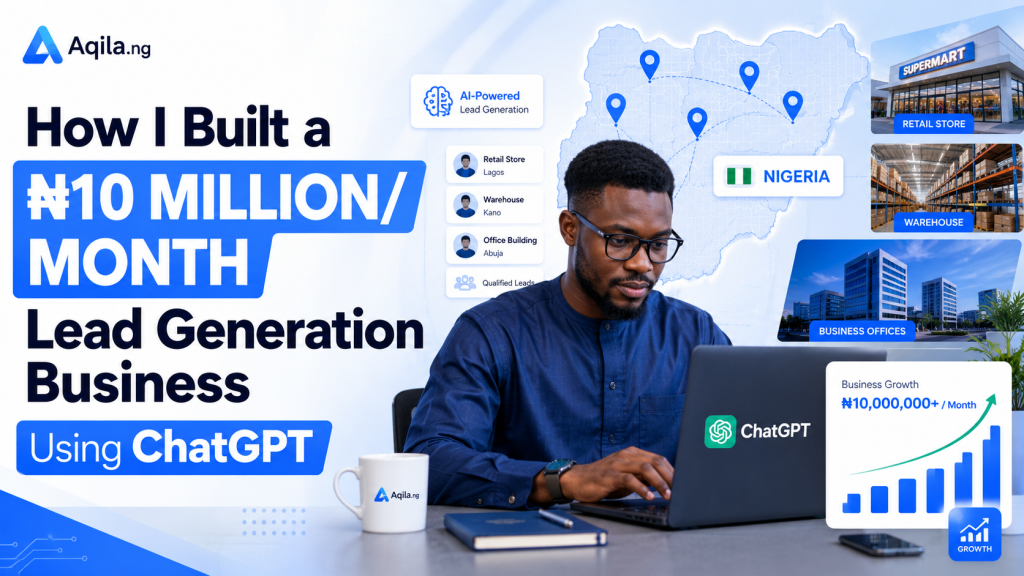
If done correctly, lead generation can become a highly profitable business capable of generating ₦10 million or more every month.
In this article, I’ll share the exact approach I use, powered by ChatGPT and publicly available data, to build a modern lead generation business in Nigeria.
Why Lead Generation Is Still a Goldmine in Nigeria
Businesses across Nigeria spend millions of naira every year trying to attract customers.
Whether it’s a real estate company in Abuja, a law firm in Lagos, a warehouse operator in Kano, or a retail business in Port Harcourt, the biggest challenge remains the same:
How do we consistently get new customers?
The answer is simple: quality leads.
Businesses are willing to pay a premium for leads because one customer can generate substantial revenue.
For example:
- A real estate company selling a ₦50 million property can easily pay hundreds of thousands of naira for qualified prospects.
- A software company can generate millions from a single corporate client.
- Retail businesses need a constant stream of customers to survive.
The opportunity is massive for anyone willing to bridge this gap.
Phase 1: Finding Businesses That Need Your Services
The foundation of successful lead generation starts with data collection.
Fortunately, you don’t need to buy expensive databases or engage in questionable scraping practices. Most of the information you need is already publicly available.
1. Google Maps: My Favourite Lead Generation Tool
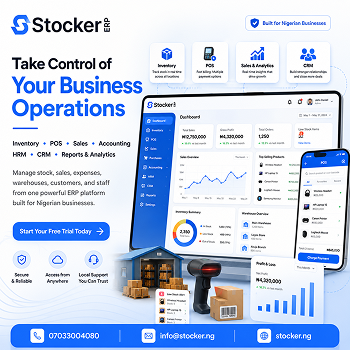
One strategy that has worked exceptionally well for me was when I was generating leads for Stocker ERP, our inventory and business management solution.
Instead of targeting everyone, I decided to focus specifically on businesses that would genuinely benefit from inventory management software.
I went on Google Maps and searched for:
- Supermarkets
- Provision stores
- Pharmacies
- Fashion stores
- Building material shops
- Electronics retailers
- Warehouses
- Distributors
- Wholesale businesses
I deliberately targeted businesses involved in selling products and managing inventory because these businesses naturally have pain points that Stocker ERP solves.
For example, if I found a supermarket in Abuja or a warehouse in Lagos, I already knew they likely struggled with stock management, inventory tracking, employee accountability, or reporting.
This made my outreach highly relevant.
That simple approach helped me generate qualified leads for Stocker Inventory Management System because I wasn’t trying to sell software to businesses that didn’t need it.
I was speaking directly to businesses with existing problems.
2. LinkedIn for Decision Makers
LinkedIn is excellent when targeting medium-sized businesses and corporate organizations.
It allows you to identify:
- Founders
- CEOs
- Operations Managers
- Procurement Managers
- IT Managers
Instead of sending messages to generic company email addresses, you can communicate directly with decision-makers.
3. Local Business Directories
Nigeria has several business directories that can help you identify companies within specific industries.
I also find that many local associations and chambers of commerce have publicly available membership directories that provide valuable business information.
4. Company Websites
Business websites provide valuable insights into:
- Their services
- Contact details
- Company size
- Operational maturity
- Technology adoption
Sometimes, simply reviewing a company’s website reveals opportunities they haven’t identified themselves.
Phase 2: Using ChatGPT to Turn Raw Data Into Business Intelligence
Collecting business information is easy.
The real value comes from understanding which businesses are most likely to become paying clients.
This is where ChatGPT becomes incredibly powerful.
Instead of contacting hundreds of businesses blindly, I use ChatGPT to help identify the most promising prospects.
Identifying Problems Businesses Already Have
I often provide ChatGPT with information gathered from:
- Company websites
- Customer reviews
- Social media pages
- Product descriptions
Then I ask questions such as:
- What operational problems might this business have?
- Which services would be most beneficial to them?
- What weaknesses can be improved?
This transforms ordinary contact information into actionable business intelligence.
Analyzing Customer Reviews
One of my favourite strategies is analyzing Google reviews.
For example, if multiple customers complain about:
- Long waiting times
- Poor customer service
- Stock shortages
- Delayed deliveries
these become excellent conversation starters during outreach.
Rather than pitching generic solutions, I can approach businesses with specific observations.
Prioritizing High-Value Leads
Not every business is worth pursuing immediately.
I use ChatGPT to rank businesses based on factors such as:
- Size of operations
- Existing digital presence
- Industry relevance
- Growth potential
- Likelihood of purchasing software or services
This helps me focus my energy where conversion rates are highest.
Phase 3: Writing Outreach That Actually Gets Responses
Most cold emails fail for one simple reason:
They sound like spam.
Business owners receive countless messages every week promising to increase sales by 500% or dominate Google rankings.
I’ve found that personalized communication performs significantly better.
My approach follows four simple steps.
Step 1: Start With a Specific Observation
I immediately demonstrate that I’ve researched their business.
For example:
“I noticed that your retail store manages multiple product categories, and I was curious about how you’re currently tracking inventory across branches.”
This instantly separates me from mass marketers.
Step 2: Highlight the Business Impact
Next, I explain why this issue matters.
For example:
“Without proper inventory visibility, businesses often experience stock shortages, overstocking, and revenue leakage.”
This helps business owners understand the cost of inaction.
Step 3: Present a Relevant Solution
I then introduce a solution naturally.
For example:
“We built Stocker ERP specifically to help Nigerian retail businesses simplify inventory management, improve reporting, and maintain better control over their operations.”
Notice that this isn’t a hard sales pitch.
It’s a conversation.
Step 4: Use a Simple Call to Action
Avoid asking for lengthy meetings immediately.
Instead, I ask:
- “Would you like me to show you a quick demo?”
- “Can I send you a short overview of how this works?”
- “Is this something your business is currently exploring?”
Simple questions generate higher response rates.
Phase 4: Packaging Leads as a Premium Service
Many people make the mistake of selling raw contact lists.
The real money comes from selling research and insights.
Here’s how I structure lead packages.
Basic Package (₦50,000 – ₦150,000)
Includes:
- Business names
- Phone numbers
- Addresses
- Basic contact details
Enriched Package (₦250,000 – ₦750,000)
Includes:
- Decision-maker contacts
- Business category segmentation
- Company size estimates
- Website evaluations
- Lead prioritization
Premium Intelligence Package (₦1 Million and Above)
Includes:
- Deep business research
- Identified operational challenges
- Customized outreach messaging
- Competitive analysis
- Highly qualified prospects ready for engagement
Businesses are willing to pay significantly more for leads that have been carefully researched and qualified.
After all, twenty high-quality prospects are often more valuable than five thousand random contacts.
The Secret Most People Ignore: Follow-Up
This is where many lead generation businesses fail.
You can have excellent data, perfect messaging, and amazing tools, but if you don’t follow up consistently, you’ll miss opportunities.
Business owners are busy.
Sometimes they intend to respond but simply forget.
I usually follow this sequence:
Day 1
Send the initial personalized message.
Day 3
Follow up politely:
“Just checking in to see if you had a chance to review my previous message.”
Day 7
Provide additional value.
For example:
“I noticed another opportunity that could improve your operations, so I thought I’d share it with you.”
Persistence without being aggressive is key.
Final Thoughts
From my experience running businesses and building solutions like Stocker ERP, I’ve learned that lead generation is not about sending thousands of messages.
It’s about solving problems for the right businesses.
Using tools like ChatGPT allows us to work smarter by identifying opportunities, understanding customer pain points, and crafting personalized communication at scale.
As I continue sharing business insights on Aqila.ng, one thing remains clear:
In a world where AI makes content creation easier than ever, the ability to connect businesses with paying customers remains one of the most valuable skills you can develop.
If you can consistently generate qualified leads for Nigerian businesses, building a ₦10 million per month lead generation business is not only possible—it is entirely achievable.