



Pricing is one of the biggest reasons many Nigerian businesses struggle, even when sales look good on the surface. You may be selling fast, collecting payments daily, and still feel like the money disappears. In most cases, the problem is not sales. The problem is pricing. Just because your bought an item for ₦2,000 and you sold it for ₦2,500 does not mean you make profit, have you considered the expenses?
This guide will teach you how to correctly calculate the true cost price of your products, how to avoid hidden losses, and how to set profitable retail and wholesale prices using clear formulas you can apply to any business.
Whether you sell phones, electronics, clothing, food items, cosmetics, or wholesale goods, this pricing method works.


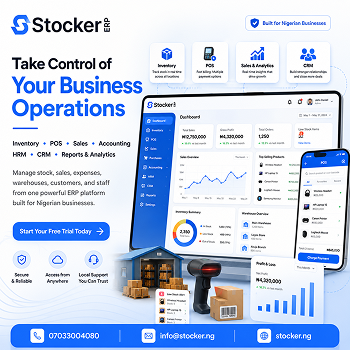
Note: One of the best way to know how to price your product, is to use an Inventory Management software like Stocker ERP, to manage your suppliers and purchases.
Why Correct Pricing Matters More Than Sales
Many business owners focus heavily on selling more units, running promotions, or undercutting competitors. But selling more at the wrong price only increases your losses.
Here is the truth:


- Revenue keeps you busy
- Profit keeps you alive
If your pricing is wrong, your business is slowly bleeding money, even if customers are buying.
That is why understanding cost price calculation is a non-negotiable skill for every business owner.

What Is Cost Price?
Cost price is the total amount it truly costs you to bring a product into your business and make it ready for sale.
It is not just the supplier’s price.
Your true cost price includes:
- Purchase price
- Shipping or logistics
- Import duties or taxes
- Feeding, accommodation, or transport during sourcing
- Packaging
- Platform or transaction fees
- Any other expense directly tied to getting the product
If you ignore these extra costs, your pricing will be inaccurate.
Real Example: Calculating Cost Price Step by Step
Let us use a practical example involving two products.
Products Purchased
iPhone 12
- Unit purchase price: ₦100,000
- Quantity: 10 units
- Total cost: ₦1,000,000
iPhone 13
- Unit purchase price: ₦200,000
- Quantity: 10 units
- Total cost: ₦2,000,000
Other Expenses
- Shipping
- Tax
- Feeding
Total shared expenses: ₦50,000
The key question is:
How do we correctly calculate the cost price of each phone?
Step 1: Calculate Total Purchase Value
First, add the total value of all products purchased.
₦1,000,000 + ₦2,000,000 = ₦3,000,000
This figure is important because shared expenses must be distributed based on value.
Step 2: Why Shared Expenses Must Be Allocated Properly
The ₦50,000 expense was not spent on iPhone 12 alone or iPhone 13 alone. It supported the entire purchase.
A common mistake is dividing expenses equally by quantity. This looks simple but it is wrong when products have different prices.
A more expensive product should carry a larger portion of the expense.
The correct method is value-based allocation.
Step 3: Expense Allocation Formula
Use this formula:
Allocated Expense =
(Product Total Value ÷ Total Purchase Value) × Total Shared Expenses
This formula ensures fairness and accuracy.
Step 4: Allocate Expenses to Each Product
iPhone 12
- Product value: ₦1,000,000
(1,000,000 ÷ 3,000,000) × 50,000
= ₦16,667 (approximately)
iPhone 13
- Product value: ₦2,000,000
(2,000,000 ÷ 3,000,000) × 50,000
= ₦33,333 (approximately)
Step 5: Calculate Total Cost per Product
iPhone 12 (10 units)
- Purchase cost: ₦1,000,000
- Allocated expenses: ₦16,667
Total cost: ₦1,016,667
iPhone 13 (10 units)
- Purchase cost: ₦2,000,000
- Allocated expenses: ₦33,333
Total cost: ₦2,033,333
Step 6: Calculate Cost Price Per Unit
This is the most important number for pricing.
Formula:
Cost price per unit = Total cost ÷ Quantity
Results
- iPhone 12: ₦1,016,667 ÷ 10 = ₦101,667
- iPhone 13: ₦2,033,333 ÷ 10 = ₦203,333
If you sell below these prices, you are running at a loss.
Setting a Profitable Selling Price
Knowing your cost price is only step one. The next step is deciding how much profit to make.
Retail Pricing Explained
Retail pricing targets end users and usually carries higher margins because:
- You sell smaller quantities
- You handle marketing and customer service
- You take more risk
Simple Retail Pricing Formula
Selling Price = Cost Price + Desired Profit
Retail Pricing Example
iPhone 12
- Cost price: ₦101,667
- Desired selling price: ₦125,000
Profit per unit:
₦125,000 − ₦101,667 = ₦23,333
Profit on 10 units:
₦233,330
iPhone 13
- Cost price: ₦203,333
- Selling price: ₦250,000
Profit per unit:
₦46,667
Profit on 10 units:
₦466,670
This is healthy retail pricing.
Wholesale Pricing Explained
Wholesale pricing is different. You sell:
- In larger quantities
- At lower margins
- To resellers who also need to make profit
Your goal in wholesale is volume and speed, not maximum margin per unit.
Wholesale Pricing Formula
Wholesale Price = Cost Price + Small Profit
Wholesale profit margins typically range between 5% and 15%, depending on industry.
Wholesale Pricing Example
iPhone 12
- Cost price: ₦101,667
- Wholesale price: ₦110,000
Profit per unit:
₦8,333
Sell 50 units:
₦416,650 profit
iPhone 13
- Cost price: ₦203,333
- Wholesale price: ₦215,000
Profit per unit:
₦11,667
Sell 50 units:
₦583,350 profit
Lower margin, but faster turnover.
Retail vs Wholesale: Key Differences
| Factor | Retail | Wholesale |
|---|---|---|
| Quantity | Small | Large |
| Margin | Higher | Lower |
| Speed | Slower | Faster |
| Customer | End user | Reseller |
| Risk | Higher | Lower per unit |
Smart businesses often combine both.
Common Pricing Mistakes to Avoid
1. Pricing Based on Competitors Only
Your competitor’s cost structure is not your cost structure.
2. Ignoring Hidden Expenses
Small fees add up and eat profits quietly.
3. Discounting Without Knowing Break-Even
Never discount below your cost price.
4. Mixing Wholesale and Retail Prices
Wholesale customers should not pay retail prices, and retail customers should not access wholesale prices easily.
Final Thoughts: Price With Confidence
Pricing is not guesswork. It is a calculation.
If you understand:
- Your true cost price
- Your target profit
- Your customer type (retail or wholesale)
Then you are in control of your business.
Businesses don’t fail because owners don’t work hard.
They fail because owners price wrongly.
Next Steps for Business Owners
- Always calculate cost price before selling
- Review pricing whenever costs change
- Separate retail and wholesale pricing clearly
- Track profit per unit, not just total sales
If you master pricing, you give your business a real chance to grow and survive.
FAQ
What is the difference between cost price and selling price?
Cost price is the total amount it costs you to acquire and prepare a product for sale, including purchase price and all related expenses. Selling price is what you charge customers. The difference between the two is your profit or loss.
Why should shared expenses be allocated by value instead of quantity?
Allocating expenses by value is more accurate because expensive products consume more capital and risk. Sharing expenses by quantity can overprice cheaper items and underprice expensive ones, leading to hidden losses.
How do I know the minimum price I can sell without making a loss?
Your minimum price is your cost price per unit. Selling below this price means you are losing money on every sale. Always calculate this before offering discounts or promotions.
Can I use the same pricing method for both retail and wholesale?
The cost price calculation remains the same, but the selling price changes. Retail pricing usually has higher margins, while wholesale pricing focuses on lower margins and higher volume. You should clearly separate both strategies.
Conclusion
Correct pricing is not about guessing or copying competitors. It is about understanding your numbers and making deliberate decisions.
Once you know your true cost price, you stop selling blindly. You gain confidence in your prices, you know how low you can discount, and you can clearly separate retail pricing from wholesale pricing without fear of loss.
Many businesses fail not because their products are bad, but because their pricing is wrong. When you price correctly, profit becomes predictable instead of accidental.
Whether you sell phones, fashion items, electronics, food, or wholesale goods, the principles in this guide remain the same. Calculate your cost properly, choose the right pricing model, and review your numbers regularly as expenses change.
Pricing done right gives your business stability, control, and room to grow.