



As Nigeria moves deeper into digital taxation and financial transparency, business owners in 2026 are facing a more complex operating environment than ever before. The days when handwritten records, rough estimates, or informal bookkeeping were sufficient are gradually coming to an end.
One of the most common questions Nigerian entrepreneurs now ask is:
Should I invest in accounting software or inventory software?

The answer is not always straightforward. It depends on the nature of your business, how you generate revenue, and how prepared you are for Nigeria’s evolving tax system.
This article provides a detailed, practical explanation of accounting software versus inventory software, explains how the 2026 Nigerian tax reforms affect both, and helps you decide what your business truly needs.
Nigeria’s Business and Tax Environment in 2026
Nigeria’s tax reforms are increasingly focused on:

- Expanding the tax base
- Improving VAT collection
- Reducing estimated tax assessments
- Encouraging digital financial records
- Increasing audit efficiency
Federal and State tax authorities are gradually shifting away from assumptions and toward verifiable transaction data. Businesses are now expected to present:
- Clear sales records
- Accurate profit figures
- Proper expense documentation
- Transparent VAT calculations
In this environment, choosing the wrong business software can expose you to over-taxation, penalties, or compliance issues.


What Is Inventory Software?
Inventory software is designed to manage physical goods and daily business operations. It focuses on tracking products from purchase to sale and helps business owners understand what is happening on the shop floor in real time.
Core Functions of Inventory Software
Inventory software typically handles:
- Product listing and categorization
- Stock quantity tracking
- Cost price and selling price management
- Point of Sale (POS) transactions
- Supplier and purchase records
- Stock movement history
- Low-stock alerts
- Sales performance by product
In essence, inventory software answers questions such as:
- What items are selling the most?
- What stock is about to finish?
- Which products are generating profit?
- How much capital is tied down in stock?
Businesses That Need Inventory Software

Inventory software is essential for businesses that sell physical products, including:
- Retail stores
- Fashion and clothing businesses
- Supermarkets and provision stores
- Pharmacies
- Electronics and gadget shops
- Ecommerce stores
- Wholesalers and distributors
For these businesses, inventory software is not optional in 2026. Without it, daily operations become inefficient and financial records become unreliable.
What Is Accounting Software?
Accounting software focuses on financial reporting, tax compliance, and business financial health. It records monetary transactions rather than physical goods.
Core Functions of Accounting Software
Accounting software typically manages:
- Income and expense records
- Profit and Loss statements
- Balance sheets
- Cash flow reports
- VAT and tax calculations
- Bank reconciliation
- Payroll and staff salaries
- Audit-ready financial reports
Accounting software answers questions such as:
- Is the business profitable?
- How much tax do I owe?
- How much did I spend last month?
- What is my current cash position?
Businesses That Need Accounting Software First
Accounting software is more suitable as a first priority for:
- Service-based businesses
- Consultants and freelancers
- Digital agencies
- Contractors
- Professional firms
These businesses do not manage physical stock, so their main concern is income tracking, expenses, invoicing, and tax reporting.
Inventory Software vs Accounting Software: A Clear Comparison
| Function | Inventory Software | Accounting Software |
|---|---|---|
| Product management | Yes | No |
| Stock tracking | Yes | No |
| POS and sales recording | Yes | No |
| Cost of goods tracking | Yes | Limited |
| Supplier management | Yes | Limited |
| Profit per item analysis | Yes | No |
| VAT calculation | Basic | Advanced |
| Financial statements | Limited | Yes |
| Audit preparation | Partial | Yes |
This table highlights a critical truth: inventory software and accounting software solve different problems.
Why Many Nigerian Businesses Get This Wrong
A common mistake among Nigerian business owners is starting with accounting software alone, especially when they sell physical products.
This leads to several problems:
- Stock values are estimated, not calculated
- Cost of goods sold is inaccurate
- VAT is calculated on unreliable sales data
- Profit figures are misleading
- Stock theft and losses go unnoticed
By the time tax season arrives, the numbers presented to tax authorities do not reflect reality.
The Impact of Nigeria’s 2026 Tax Reform on Software Choice
1. Increased Emphasis on Accurate VAT Reporting
VAT is charged at the point of sale. If sales records are incomplete or inaccurate, VAT calculations will be wrong.
Inventory software ensures that:
- Every sale is recorded
- VAT is applied correctly
- Sales data flows into accounting reports
Without proper inventory tracking, VAT reporting becomes guesswork.
2. Digital Record Keeping Is Becoming the Standard
Tax authorities are increasingly interested in:
- Digital transaction history
- Clear stock valuation
- Traceable income sources
Businesses that cannot present structured digital records are more likely to face estimated tax assessments or audits.
3. Inventory Valuation Affects Taxable Profit
Inventory directly affects:
- Cost of goods sold
- Gross profit
- Taxable income
Without inventory software, businesses cannot accurately calculate profit, which can lead to either overpayment or underpayment of tax.
Which Software Should You Choose First?
Product-Based Businesses
If your business sells physical products, the correct order is:
- Inventory software
- Accounting software (or accounting integration)
Inventory software captures real sales and stock data. Accounting software then uses this data to produce accurate financial reports.
Service-Based Businesses
If your business sells services only, the correct order is:
- Accounting software
- Inventory software (optional)
Since there is no physical stock, financial tracking and tax compliance take priority.
The Best Solution in 2026: Integrated Systems
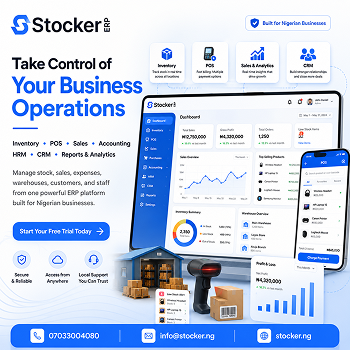
Many modern business systems now combine inventory and accounting features into a single platform.
This approach offers:
- Automatic syncing of sales data
- Accurate VAT calculations
- Real-time profit visibility
- Faster audit preparation
- Reduced manual errors
For growing Nigerian businesses, integrated systems reduce complexity and improve compliance.
Why This Decision Matters for SMEs
Small and medium-sized businesses are the most affected by:
- Tax reforms
- Estimated tax assessments
- Compliance enforcement
Using the right software helps SMEs:
- Pay the correct amount of tax
- Avoid unnecessary penalties
- Understand their true business performance
- Defend their records during audits
Final Verdict: Inventory Software or Accounting Software?
The correct decision depends on what your business sells.
- If you sell products, inventory software is the foundation.
- If you sell services, accounting software is the foundation.
- If you want to grow sustainably, integrate both.
Inventory software manages operations.
Accounting software explains financial performance.
Nigeria’s tax system in 2026 requires both accuracy and transparency.
Frequently Asked Questions
Can accounting software replace inventory software?
No. Accounting software records money, not stock movement.
Is inventory software acceptable for tax reporting?
Yes, especially when integrated with accounting features.
Do small businesses really need digital systems?
Yes. Small businesses are most vulnerable to estimated tax assessments.
Can one system handle both inventory and accounting?
Yes. Many modern ERP and POS systems now combine both functions.
What happens if my records are inaccurate?
You may overpay tax, underpay tax, or face penalties during audits.
Conclusion
In 2026, Nigerian businesses can no longer rely on assumptions or manual records. Tax reforms are pushing businesses toward transparency, accuracy, and digital reporting.
Choosing the right software is not just about convenience — it is about protecting your business, your profits, and your future.
For product-based businesses, start with inventory software.
For service-based businesses, start with accounting software.
For serious growth, integrate both.