



Let me be straightforward with you.
After five years of working closely with business owners across different industries — from retail shops in Lagos to wholesale distributors in Abuja — I have seen the same painful pattern repeat itself over and over again. Businesses that are making sales, moving products, and seemingly doing well on the surface, but quietly hemorrhaging money at the back end. Money that should be profit. Money that simply disappears.
And the culprit almost every single time? Poor inventory management.
I am not writing this article because it is good for my blog. I am writing it because I have sat across the table from too many business owners who could not explain where their money went, and I helped them find the answer. I have also built one of Nigeria’s most capable inventory management tools — Stocker ERP — precisely because I saw how badly this problem needed solving.
So here are the 6 inventory rules that, if you apply them starting today, will give you something most business owners never truly have: clarity and control over your own business.
Rule 1: Record Every Item Before It Hits the Shelf — Because That’s Where Theft Begins
This is not a suggestion. This is the single most important habit you can build as a business owner.
The moment goods arrive at your premises — before they are unpacked, before they are arranged, before anyone touches them — they must be logged. Every unit. Every item. Against the purchase order or invoice from your supplier.
Here is why this matters so much: the gap between your supplier’s delivery and your shelf is where theft lives.
Imagine you order 200 units of a product. Your supplier delivers the truck, your staff unload it, and the goods go straight to the shelf or the store room without being counted. Two weeks later, you do a stock count and realise you only have 170 units. You sold 20. Where are the other 10? Nobody knows. There is no record to trace it back to. Was it your supplier that shorted you? Was it a member of staff? Was it a counting error? You will never know because you did not record before the goods entered.
The rule is simple: receiving without recording is the same as giving money away blindly.
| Action | What It Prevents |
|---|---|
| Count goods on arrival | Supplier shortages and delivery discrepancies |
| Record against purchase order | Overpayments and ghost deliveries |
| Sign off by at least two people | Internal theft at the receiving stage |
| Enter into your inventory system immediately | Data gaps and reconciliation headaches later |
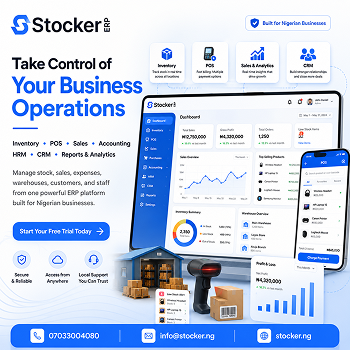
With Stocker ERP, you can log incoming stock directly from your phone or computer the moment a delivery arrives, automatically comparing it against your purchase order and flagging any discrepancies in real time.
Rule 2: Do Regular Stock Counts — Not Just Once a Year
If you are only counting your inventory at the end of the financial year, you are essentially waiting for your car to break down completely before you check the engine. By then, the damage is already done.
Regular stock counts — also called cycle counts — are how you stay on top of what is actually happening in your business. The frequency depends on your business size and product volume, but here is a practical framework:
| Business Type | Recommended Count Frequency |
|---|---|
| Small retail shop | Weekly |
| Mid-size distributor | Bi-weekly or monthly |
| Large warehouse/wholesale | Monthly by category |
| High-value items (electronics, jewellery) | Weekly or after every major sale |
When you count regularly, you catch problems early. You know what is missing. You know what is damaged. You know what was supposed to be there but is not. And because you are comparing fresh records, it is far easier to trace where the problem occurred.
A business owner I worked with in Abeokuta was losing roughly ₦800,000 worth of stock every quarter. He thought it was just “business losses.” When we implemented weekly stock counts with proper records, we discovered within the first month that a particular staff member had been systematically removing items over time. Regular counts exposed it. An annual count never would have.
Stocker ERP gives you a built-in stock count feature that lets you run counts by category, location, or product, and instantly shows you the variance between your expected quantity and your physical count, so you know exactly where to look.
Rule 3: Set Reorder Levels for Every Product — Before You Run Out
This is where most small and medium businesses lose customers they never recover.
A reorder level is the minimum quantity of a product that triggers a new purchase order. It means you do not wait until your shelf is empty before you think about restocking. You have already reordered before you run out.
The formula is straightforward:
Reorder Level = (Average Daily Sales × Lead Time in Days) + Safety Stock
Example: If you sell 10 units of a product per day, and your supplier takes 5 days to deliver, your reorder point is at least 50 units. Add a safety buffer of 20 units for unexpected demand spikes, and your reorder level is 70 units. The moment your stock drops to 70, a new order goes in. By the time the delivery arrives, you still have stock left to sell.
The business that sets this up never runs out. The business that does not will wake up one morning with an empty shelf and a customer who has already gone to buy from their competitor down the street — and may never come back.
| Product Category | Suggested Safety Stock Buffer |
|---|---|
| Fast-moving consumer goods | 20–30% of average weekly sales |
| Seasonal products | 40–50% ahead of peak season |
| Slow-moving or specialty items | 10–15% (less risk of deadstock) |
| Critical/hard-to-source products | 50% or higher |
Stocker ERP allows you to set custom reorder levels per product and sends you automatic alerts when stock is approaching that threshold — so you are restocking proactively, not reactively.
Rule 4: Flag Slow-Moving Stock Fast — Dead Stock is Dead Cash
Every item sitting unsold on your shelf is money you have already spent that has not yet come back to you. The longer it sits, the worse it gets — it occupies shelf space, it may expire or go out of season, and it locks up capital that could be working harder elsewhere in your business.
The industry term is dead stock, and it is more dangerous than most business owners realise.
Here is a practical rule of thumb: If a product has not moved in two to four weeks and your usual turnover cycle is shorter than that, it needs your immediate attention. Two months of stagnation is a serious problem. Six months is a crisis.
What do you do with slow-moving stock? You move it — aggressively:
- Bundle it with a fast-moving product as a combo deal
- Discount it to recover at least your cost price
- Return it to the supplier if your agreement allows it
- Reposition it — sometimes slow stock is just in the wrong location or marketed poorly
One business I consulted for had over ₦2.3 million tied up in slow-moving products across three product lines. Once we identified them using proper inventory analytics, they ran a targeted clearance campaign and recovered 80% of that value within six weeks. The money went back into buying faster-turning stock.
Stocker ERP’s inventory analytics dashboard flags slow-moving products automatically based on sales velocity, so you never have to dig through spreadsheets to find the problem.
Rule 5: Always Reconcile Your Purchase Records Against Your Sales Records
This is the one rule that most business owners either skip completely or do not know how to apply — and it is one of the most powerful tools for understanding where your money is truly going.
The logic is simple: if 50 units entered your business and you sold 40, where are the remaining 10?
This is not a trick question. The answer should be in your store — accounted for, recorded, and verifiable. But in many businesses, it is not. And the gap between what came in and what can be accounted for represents money that has simply leaked out of the business.
Your inventory is not just product. It is the physical, tangible form of money you have spent. Think of your stock the way you think of cash in a safe. If you put ₦500,000 in a safe and later find only ₦430,000, you would not shrug it off. You would want to know exactly where the ₦70,000 went. Your inventory deserves the same standard of accountability.
Here is how to build a proper reconciliation habit:
| Step | Action | Frequency |
|---|---|---|
| 1 | Record all incoming stock (Rule 1) | Every delivery |
| 2 | Log all sales as they happen | Daily |
| 3 | Compare expected closing stock vs physical count | Weekly/monthly |
| 4 | Investigate all variances above a set threshold | Immediately |
| 5 | Document findings and adjust records | After each count |
When you do this consistently, you build a paper trail that makes it nearly impossible for money to disappear without detection. You can trace losses to specific time periods, specific staff shifts, or specific product categories.
Stocker ERP automates this reconciliation process, giving you a real-time view of your stock movement history — what came in, what was sold, what was returned, and what remains — all in one place, without needing a complicated spreadsheet.
Rule 6: Keep Detailed Expense Records — Because Not All Bleeding Comes From Inventory
Your inventory losses are only one part of the picture. The other part — often ignored — is your operating expenses. And without detailed expense records, you cannot see the full picture of where your money is going.
Business owners often focus so heavily on sales and stock that they do not notice how much is quietly leaving the business through expenses. Generator fuel. Staff wages. Transport and logistics. Taxes. Packaging materials. Market levies. Maintenance costs. These numbers add up faster than most people expect.
I have worked with businesses that were genuinely profitable on paper — their sales margins looked healthy — but they were barely breaking even at the end of every month. When we sat down and traced the expenses properly, the reasons became clear. In one case, a business in Benin City was spending over ₦180,000 a month on diesel for their generator — 22% of their total operating cost — because they had never tracked it formally. Once it was visible, they made a decision to invest in a solar inverter system. Within four months, that ₦180,000 monthly spend dropped to under ₦30,000. That single insight, driven by proper expense tracking, effectively added millions to their annual profitability.
| Expense Category | Common Blind Spots |
|---|---|
| Utilities | Generator fuel, electricity bills, internet costs |
| Logistics | Delivery costs, transport, rider fees |
| Staff | Overtime pay, casual labour that is not tracked |
| Taxes & levies | Multiple levies from different government bodies |
| Packaging & consumables | Often absorbed into general costs and untracked |
| Maintenance | Equipment servicing that happens irregularly |
Every one of these is money leaving your business. If you are not recording it, you are not managing it. And if you are not managing it, you cannot reduce it.
Stocker ERP includes an expense tracking module that lets you categorise, record, and analyse every outgoing cost in your business — giving you a clear breakdown of where your money is going outside of stock purchases, so you can make informed decisions about where to cut and where to invest.
The Bottom Line: Data is the Most Powerful Tool a Business Owner Can Have
Numbers do not lie. Feelings do. Assumptions do. Gut instinct does. But numbers — when they are clean, current, and properly captured — give you the clearest possible picture of your business reality.
The six rules above are not complicated. They do not require a finance degree or an army of accountants. What they require is discipline, consistency, and the right tools.
That is exactly why we built Stocker ERP — for the modern Nigerian business owner who is done guessing and ready to start knowing. Ready to see exactly how much stock they have, where it is, what is moving, what is not, what it cost, and what it is worth. All in real time.
Time is money. And data is gold.
If you are serious about taking back control of your business, stop running it on memory and manual sheets. The businesses that thrive in the next five years will be the ones that invest in the right information today.
Register on Stocker ERP today and start managing your business with the clarity and confidence you deserve.
Have questions or want to share your own inventory experience? Drop a comment below — I read every single one.